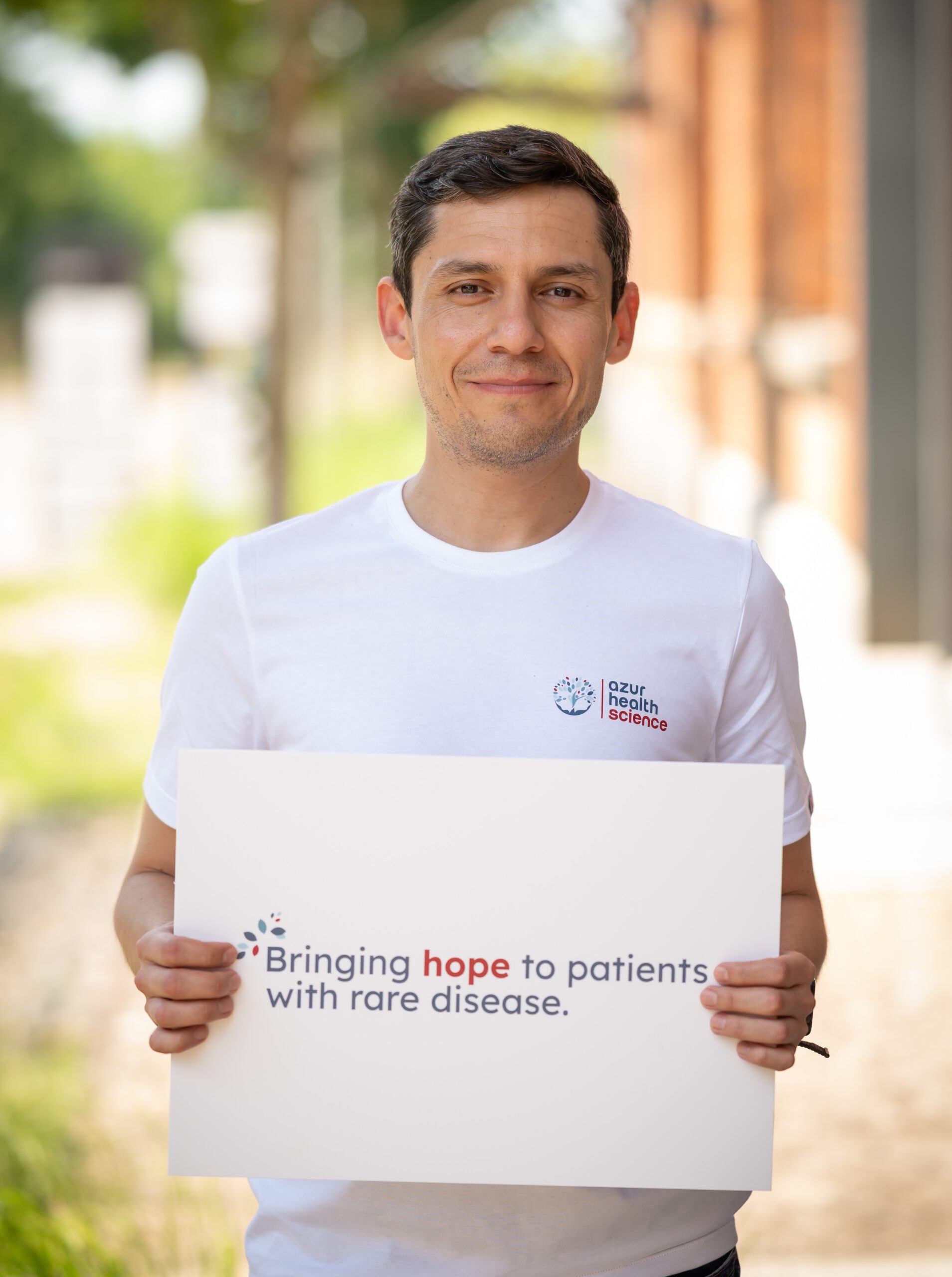
Welcome to Azur with Socrates
Welcome to Azur: People at the heart of science
At Azur Health Science, people are at the core of everything we do.
Every day, our team brings expertise, curiosity, and dedication to advance research in rare diseases. Through this series, we highlight the individuals who contribute to our scientific mission, those whose work, passion, and stories shape Azur from within.
✨ Today, we’re delighted to introduce Socrates Noguerola, who shares his journey, his motivations, and his experience as part of the Azur Health Science team.
Let’s begin by getting to know your role and how you contribute to the team
I would describe my role as a Medical Writer at Azur as a multifaceted one. In addition to creating clear, accurate, and scientifically sound documents for different audiences in healthcare and pharma, I help transform complex medical information into clear and meaningful communication. My role requires not only scientific accuracy, but also collaboration, attention to detail, and the ability to adapt content depending on the audience and the objective of the document. I also support quality review processes and work closely with colleagues to make sure projects are delivered on time and to a high standard.
Could you describe a typical workday as a medical writer at Azur?
I think most of my colleagues would agree that there is no such thing as a typical day in medical writing. However, if I had to describe one, I would say that my day starts around 9:00 a.m. Since I work fully remotely, my commute is only about 15 steps to my desk. I start by turning on my computer, greeting the team virtually, and checking my emails and notifications.
After that, I review my workload for the day using both my notes from the previous day and a Smartsheet where I track the status of my projects. This helps me prioritize tasks and organize my time effectively.
At around 10:00 a.m., I have a team meeting with the project manager to go over the week’s schedule, identify any potential issues, and make sure we are aligned on priorities. Because we work in a collaborative environment, we also support one another in meeting deadlines.
The rest of the day depends on the projects I am working on, but in general, my work requires a high level of focus and attention to detail. I usually work in dedicated time blocks to stay focused and avoid distractions.
Around midday, I take a lunch break, and whenever possible, I enjoy it with my wife and little son. After lunch, I often go for a short walk to get some fresh air and recharge before returning to work, usually with a fresh cup of coffee.
Since I spend much of the day sitting and working at a screen, I also make sure to take short breaks to stretch and rest my eyes. Before finishing the day, I write down what I completed and what is still pending so that I can start the next day in an organized way.
Before joining Azur, what eperiences, academic or personal, shaped your path toward this field ?
Before joining Azur as a medical writer, I spent most of my career in academia, where I divided my time between working in the laboratory, giving lectures, and reading and writing a variety of scientific documents. Although I enjoyed working in academia, I decided that I wanted to pursue other professional and personal goals, which eventually led me to explore opportunities outside that environment.
This was not an easy decision, and to be honest, I was not sure where it would take me. However, after landing my first job outside academia, I soon found myself looking for a new position again because of unforeseen circumstances. On the bright side, this gave me the opportunity to start over, reflect, and think carefully about what I wanted to do next.
After extensive research into new career paths, I found that medical writing was the option that best aligned with my professional interests and personal values. My passion for translating complex scientific information clearly and concisely, while making a direct impact on patients’ lives, motivated me to pursue a career in medical writing.
What part of the writing process challenges you the most, and how do you approach those moments?
For me, the most challenging part of the writing process is managing input from multiple stakeholders. When a document is long and complex, this becomes even more demanding, because it is important to keep track of all comments while maintaining consistency across the document.
To approach this, I first take the time to read through the entire document carefully and review all the feedback provided. I then organize the input by theme, prioritize the key points, and address them systematically. This helps me stay structured and ensures that all feedback is considered thoughtfully and efficiently.
What draws you the field of rare diseases, and what makes this area of research particulary meaningful to you ?
I was first introduced to this topic through my current job. To be honest, I did not know much about rare diseases beforehand. I was aware of their existence, but I had not fully understood their scale, their impact, or the challenges patients often face in getting a diagnosis and accessing treatment.
My interest in this field became even stronger when a close relative was diagnosed with a rare disease. Seeing some of those challenges firsthand made this area of research feel especially meaningful to me.
Is there a type of document, project, or therapeutic area you especially enjoy working on?
That is a difficult one to define, but if I had to choose one type of document, I would say lay summaries, or plain language summaries. Being able to translate complex scientific data into simple, accessible language can be quite challenging. However, I think writing for lay audiences is especially important because it makes medical information more accessible, supports trust and informed decision-making, and helps ensure that patients and the public are not excluded from conversations that directly affect them.
Outside of work, what activities or passions help you recharge or express yourself?
For me, spending time with my family and friends is one of the best ways to recharge. It may sound cliché, but in a time when we tend to spend so much of our lives in the digital world, maintaining in-person relationships feels especially important to me.
Besides that, I really enjoy playing football, which is another great way for me to disconnect, recharge, and stay active.
What are you excited to explore next in your journey as a medical writer?
I’m looking forward to expand my knowledge in rare diseases and develop my writing skills in this area.
A Big Thank You, Socrates
Thank you, Socrates, for taking the time to share your story with us.
Your journey shows how dedication, curiosity, and a genuine passion for science can shape a meaningful career. From your first steps at Azur to your evolving role within the team, you’ve built something that truly reflects who you are.
We’re grateful to have you with us on this journey.
It’s been a pleasure hearing your experience, and we look forward to many more inspiring conversations here on Welcome to Azur. See you next time!
Until then, continue exploring Azur’s story and the people who bring our mission to life.